

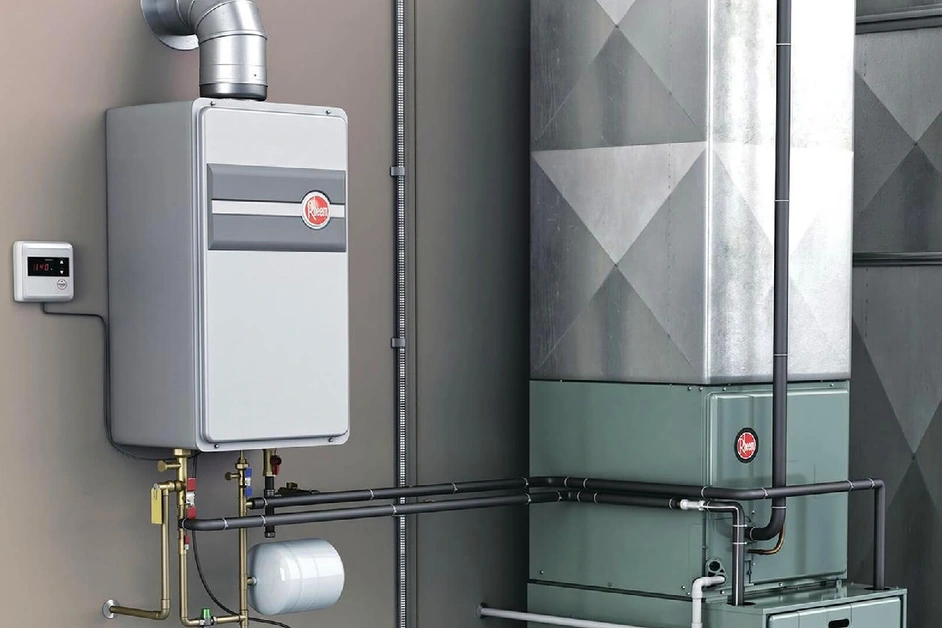
If your water heater is aging, struggling to keep up, or due for replacement, a tankless system may be one of the options you are considering. Tankless water heaters can provide continuous hot water within their rated capacity, take up less space, and reduce the standby heat loss associated with storing hot water in a tank.
But tankless is not automatically the right choice for every home.
Whether it makes sense depends on your household’s hot water demand, fuel source, incoming water temperature, existing gas or electrical capacity, venting options, water quality, installation complexity, and budget.
At Your Local Plumbing, we believe homeowners should understand these factors before choosing a system. This guide explains the essentials, including cost, sizing, installation, maintenance, and long term ownership, without making the subject unnecessarily technical.
A tankless water heater, also called an on demand or instantaneous water heater, heats water as it passes through the unit instead of storing a large supply of heated water.
When you open a hot water fixture, a flow sensor detects demand and activates the heating system. Cold water passes through a heat exchanger, where a gas burner or electric heating element raises its temperature. Once the water stops flowing, the heating system shuts down.
The U.S. Department of Energy describes gas tankless systems as providing hot water when needed without the standby losses associated with storage water heaters.
The main limitation is capacity. A tankless heater can continue producing hot water for an extended period, but only at the flow rate and temperature rise it was designed to handle.
Gas models use natural gas or propane. They are commonly used for whole house applications because they can provide substantial heating output.
Installation may require an adequately sized gas supply, approved venting, electrical power for controls and ignition, and a suitable condensate drain when a condensing model is installed.
Electric models use resistance heating elements instead of combustion. They do not require a gas line or combustion vent, but larger whole house models can require substantial electrical capacity.
This makes the home’s existing electrical service and panel capacity important factors when deciding whether an electric tankless system is practical.
Condensing gas heaters capture additional heat from combustion exhaust before it leaves the unit. This improves heat recovery but produces condensate that must be drained properly.
Noncondensing units operate differently and may require different venting materials or configurations.
Condensing gas heaters capture additional heat from combustion exhaust before it leaves the unit. This improves heat recovery but produces condensate that must be drained properly.
Noncondensing units operate differently and may require different venting materials or configurations

A whole house tankless system serves multiple fixtures from one central unit.
A point of use heater is installed close to an individual fixture or small group of fixtures. This type of system can be useful when hot water would otherwise need to travel a long distance through the plumbing before reaching the fixture.
Factor | Tankless | Traditional Tank |
Hot water supply | Continuous within rated capacity | Limited by stored volume |
Upfront cost | Usually higher | Usually lower |
Space required | Compact and often wall mounted | Requires space for a tank |
Standby heat loss | Avoids storage standby loss | Tank continually loses some stored heat |
Sizing | Based heavily on flow and temperature rise | Based heavily on storage capacity and recovery |
Maintenance | Scale control and manufacturer recommended service | Tank flushing and other manufacturer recommended service |
Service life | Can be relatively long | Generally shorter than tankless |
Installation | Can require infrastructure changes | Usually simpler for a direct replacement |
If your decision primarily comes down to money, read our tankless vs. tank cost comparison for a detailed look at upfront costs, operating expenses, energy savings, and lifetime ROI.
There is no single installed price that accurately represents every tankless water heater project.
The final cost can include:
A home already set up for an appropriate tankless system may require relatively little additional work. Converting from a storage tank to a tankless heater can be much more involved when changes to gas, electrical, plumbing, or venting systems are required.
This is why homeowners should compare itemized installation quotes instead of looking only at the retail price of the heater.
For a more detailed financial analysis, see our tankless water heater cost and lifetime ROI guide.
A tankless water heater can be worthwhile when its performance characteristics match the needs of the home and the installation cost is reasonable.
It may be a strong option if you:
A tankless system may be less attractive if major gas, electrical, plumbing, or venting changes are required, or if keeping the initial replacement cost as low as possible is your main priority.
Rather than asking whether tankless is universally better, ask whether it is better for your home and the way your household uses hot water.
Correct sizing is one of the most important factors affecting tankless water heater performance.
Two concepts matter most.
Peak flow rate, measured in GPM: This is the combined water flow of the fixtures you expect to use at the same time.
Temperature rise: This is the difference between the temperature of the incoming cold water and the hot water temperature you want at the fixture.
DOE guidance states that tankless sizing should account for the maximum simultaneous flow needed in the home and the required temperature rise.
For example, a home that frequently uses two showers at the same time needs more heating capacity than one where hot water fixtures are normally used individually. Homes in colder climates can also require more capacity because incoming winter water may be considerably colder.
Instead of choosing a system based only on household size, use our tankless water heater sizing calculator to evaluate GPM and temperature rise in more detail
Installation requirements vary based on the equipment, fuel type, home, manufacturer instructions, and local regulations.
A gas tankless heater can require substantial fuel input while operating. The existing gas piping and supply should be evaluated to determine whether they can properly support the selected equipment.
Gas models generally need electricity for ignition and controls.
Whole house electric tankless heaters can require considerable electrical capacity, which makes the existing electrical panel and service important parts of the installation assessment.
Gas tankless equipment requires an appropriate combustion air and exhaust configuration for the specific model.
Venting requirements should be determined using the manufacturer’s installation instructions and applicable local requirements. Homeowners should not assume that venting used for an existing storage water heater will automatically work with a new tankless system.
Hot and cold water connections may need to be modified during installation.
Condensing gas models also require a suitable method for managing and draining condensate.
Permit and inspection requirements vary by location.
The installation location can also affect required clearances, freeze protection, vent routing, maintenance access, and other important considerations.
In many homes, yes.
The more important question is how much work will be required to make the home compatible with the new system.
Fuel availability, gas capacity, electrical service, venting, plumbing layout, location, hot water demand, and local requirements can all influence feasibility and cost.
For a complete look at the process and planning considerations, read our tank to tankless conversion guide.
One of the main efficiency advantages of tankless technology is that it eliminates the need to continuously maintain a stored volume of hot water. DOE identifies the reduction of storage standby losses as a benefit of gas tankless systems.
However, higher equipment efficiency does not automatically guarantee lower total ownership costs.
Actual operating expenses depend on several factors, including:
ENERGY STAR currently cites a life expectancy of about 20 years for tankless gas water heaters.
That figure is useful as a general planning benchmark, but it should not be treated as a guarantee that every tankless unit will last 20 years.
Tankless systems require maintenance that is appropriate for the equipment and local water conditions.
Common areas that may need attention include:
Hard water can make scale management especially important because minerals may gradually accumulate inside the water heating components.
There is no single maintenance schedule that applies to every tankless heater. Homeowners should follow the manufacturer’s instructions and consider local water conditions and actual equipment use.
For more detailed maintenance information, see our tankless water heater maintenance guide.
| Problem | Possible Cause | Safe Next Step |
| No hot water | Power, ignition, gas supply, or system fault | Check basic utilities and seek professional diagnosis if the problem continues |
| Temperature fluctuates | Excessive simultaneous demand or a flow issue | Reduce demand and arrange service if the problem continues |
| Insufficient hot water | System may be undersized | Reassess peak GPM and required temperature rise |
| Reduced flow | Scale or another restriction | Have the system inspected |
| Error code | Manufacturer specific fault | Record the code and check official manufacturer documentation |
| Repeated shutdown | Safety control responding to a fault | Have the unit professionally diagnosed |
Do not attempt repairs involving gas piping, combustion components, high voltage electrical systems, safety controls, or venting unless you are appropriately qualified.
For a more detailed look at specific symptoms and causes, see our tankless water heater troubleshooting guide.
Use this quick decision framework before requesting estimates.
| Your Situation | What It Means |
| Existing infrastructure can support tankless with minimal modification | Your home may be a stronger candidate |
| Major gas, electrical, or venting upgrades are needed | Compare the total project cost carefully |
| Household has predictable simultaneous hot water demand | Correct sizing may be more straightforward |
| Household frequently runs several hot water fixtures together | A higher capacity system may be required |
| Incoming winter water is very cold | Temperature rise becomes more important |
| Hard water conditions are present | Maintenance and scale management need additional attention |
| You plan to stay in the home for many years | Longer equipment life may provide more value |
| Lowest possible upfront cost is the priority | A conventional tank replacement may deserve consideration |
No single factor determines whether tankless is right for your home. The goal is to evaluate the house, household demand, installation requirements, and budget together rather than choosing a heater based on a single marketing claim.
Before approving a quote, consider asking:
A qualified installer should be able to explain why a particular system fits your home rather than recommending equipment based only on the number of bedrooms or people in the household.
They can be. Tankless systems are often most attractive when a home can support installation without extensive upgrades and when the homeowner values compact size, continuous hot water within rated capacity, and potentially long equipment life. Whether the investment makes financial sense depends on your installation cost, energy prices, and household usage.
Yes, provided the combined flow of both showers stays within the heater’s rated capacity at the required temperature rise. If simultaneous demand exceeds the available capacity, hot water performance can decline.
Tankless systems can provide continuous hot water, but they do not provide unlimited heating capacity. Every unit has a maximum amount of water it can heat effectively under specific conditions.
There is no universal maintenance schedule for every system. The appropriate frequency depends on the manufacturer, water hardness, household usage, and specific equipment. Follow your unit’s maintenance instructions, especially when it comes to scale buildup and flushing.
In many cases, yes. Whether conversion is practical depends on the home’s gas or electrical capacity, venting options, plumbing, installation location, hot water demand, and the cost of required upgrades.
Tankless water heaters offer several meaningful advantages, including heating water when needed, reducing standby heat loss, saving space, and potentially providing a long service life. Those benefits are most valuable when the system is properly sized and suited to the home.
Before making the switch, evaluate your peak hot water demand, incoming water temperature, fuel source, electrical capacity, venting, water quality, installation requirements, and total project cost.
A well chosen tankless system should reflect how your household actually uses hot water rather than being selected simply because it promises continuous hot water.
If you are considering making the switch, Your Local Plumbing’s tankless water heater installation experts can evaluate your current system, household hot water needs, and home infrastructure to help you understand which option makes sense for your property. That gives you real information to compare your options instead of relying on a generic estimate.
Your Local Plumbing is Tacoma’s best choice for residential and commercial plumbing solutions you can always count on.